Trying to choose a glamping site for the first time can feel strangely hard. One listing shows a canvas tent on a Kenyan savanna for the price of a mid-range hotel, the next a desert dome in Oman at triple the cost, and a third a beachside tent near a reef with no private bathroom. The photos all look beautiful, the descriptions all promise luxury, and nothing tells you how to actually compare them.
This guide breaks the decision into clear steps. We’ll help you decide what kind of glamping experience you want, pick the right season and destination, set a realistic budget, compare tent types and facilities, check location and travel logistics, and book at the right time. By the end, you’ll know exactly which questions to ask before you pay a deposit, and your first night under canvas will match what you imagined.
Decide What Kind of Glamping Experience You Want
Before comparing prices or photos, decide what you actually want from the trip. Glamping covers everything from sleeping meters away from lions to stargazing over silent dunes, and these experiences barely resemble each other. The wildlife-focused camps of Kenya and Tanzania come with structured game drives, expert guides and animals moving right outside your canvas. Desert camps in Oman’s Wahiba Sands trade wildlife for dune scenery, brilliant stargazing and Bedouin-style interiors with low seating and rugs. Neither is better; they simply suit different travelers.
Think honestly about how you like to spend a day. Some people want a fixed schedule with early wake-up calls and a guide who knows where the herds are. Others would rather sip coffee slowly, walk a dune at sunset and let the landscape do the entertaining. Being clear about this before you book prevents disappointment later, because a camp that delights one traveler can feel too quiet—or too busy—for another.
Use this list to narrow the field to the style that fits you:
- Safari tents in Kenya or Tanzania suit travelers who want game drives built into each day, with elephants or giraffe often visible from the veranda before breakfast.
- Desert camps in Oman’s Wahiba Sands work well if you value silence, dark skies for stargazing and dune walks straight from your tent door, rather than guided activities all day.
- Beach and coastal sites, such as tented camps near Ningaloo Reef, fit travelers who want to snorkel over coral in the morning and fall asleep to ocean sounds at night.
- Canyon and cliffside sites, like glamping villas in AlUla or Oman’s mountains, prioritize dramatic rock formations and sweeping views over animal sightings, ideal for photography-focused trips.
Once you know which landscape and daily rhythm you want, every other choice—season, budget and booking window—becomes much easier to make. You will also compare listings more fairly, since you will be weighing camps against the experience you actually want rather than against each other.
Pick the Right Season and Destination
Season can make or break a glamping trip, because most tented camps depend on weather more than any hotel does. In East Africa, safari camps are at their best from July to October, when wildlife viewing is strongest—but that’s also the busiest and priciest window, so expect crowds at popular reserves and higher rates. If a classic savanna stay is your goal, a camp like Serengeti Bushtops with its private safari tents shows what the peak season delivers at its finest.
Desert and tropical timing
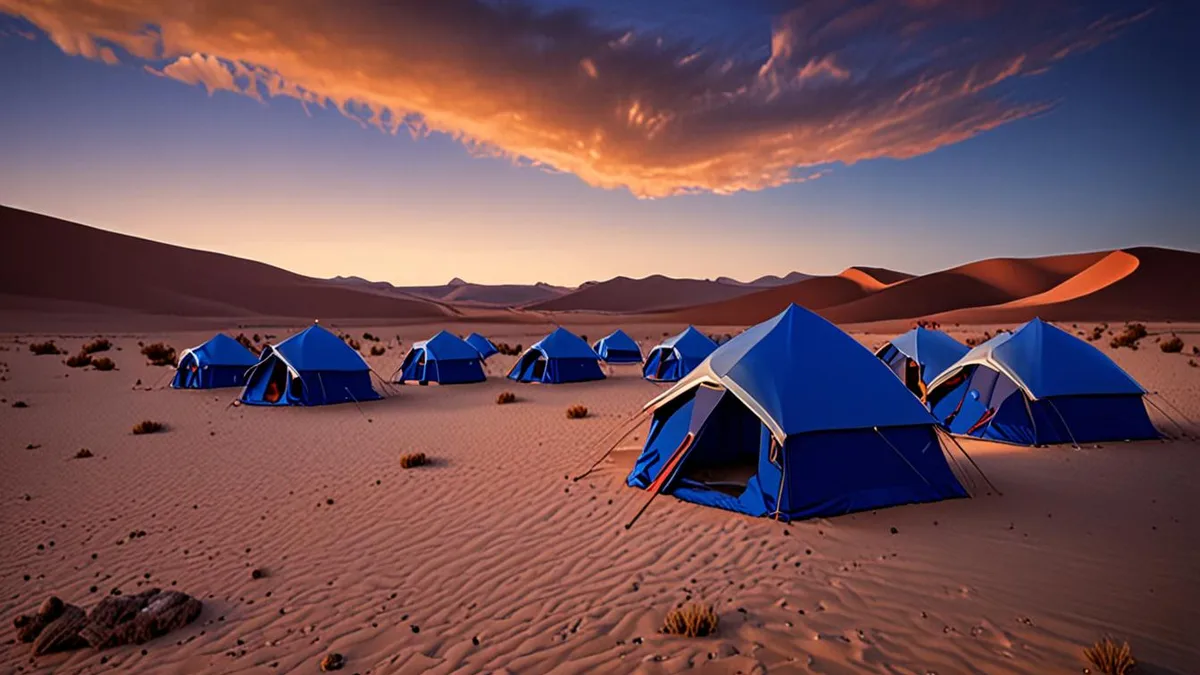
Oman and the wider Gulf desert region are comfortable from October to April, when nights drop to a pleasant 15-20°C. In summer, daytime temperatures climb above 40°C, which most tented camps simply aren’t designed for. Northern Australia follows a similar logic: its tented camps align with the dry May-October season, when skies are clear and reef trips run reliably.
The shoulder-month trick
If your dates are flexible, look at the months just before or after peak season. Shoulder months often mean lower rates and fewer guests, with only slightly less reliable weather. A week at the edge of the season can feel almost as good as the heart of it, at a noticeably friendlier price.
Set a Realistic Budget
Glamping prices vary enormously, and the word “luxury” on a listing tells you almost nothing on its own. Entry-level glamping tents start around $150-300 per night, usually with shared or simple facilities. Mid-range luxury camps typically run $400-800 per night and add private bathrooms and full board. At the top end, ultra-luxury safari and desert camps can exceed $1,500 per night once premium suites and private guides are included. Knowing which tier you’re shopping in keeps you from comparing apples to oranges, and it saves you from disappointment when the tent you booked turns out to be far simpler than the photos suggested.
The biggest budget trap is inclusions—or the lack of them. A $250 tent with paid meals and activities can end up costing more than a $450 all-inclusive camp, so always check what the nightly rate actually covers before you commit:
- Meals and drinks: all-inclusive safari-style camps usually bundle meals, drinks and game drives into the nightly rate, while self-catering or à la carte sites can add up quickly over several days.
- Activities: game drives, dune excursions or snorkel trips are sometimes included and sometimes charged per person, so ask before booking if activities are the reason you chose the camp.
- Transfers: remote sites often require a costly light-aircraft transfer or long drive, and some camps include airport pickups while others bill them separately.
- Tips and park fees: conservation or park entry fees and staff tips are often paid on site, so budget a little extra beyond the quoted nightly rate.
Work out the true per-day cost with inclusions counted, then compare camps within the same tier. That’s the number that tells you whether a deal is genuinely good.
Compare Tent Types, Comfort Levels and Facilities
Not all glamping tents are the same, and the differences matter more than photos suggest. Most luxury tents are designed for two guests, while family tents typically accommodate 4-5, so check the sleeping configuration before you book rather than assuming a “family” label covers your group. Some operators list per-tent capacity clearly; others bury it in the fine print.
Comfort levels also vary widely between listings. A tent that looks spacious in photos may have a shared bathroom block 50 meters away, while the same price bracket elsewhere gets you an en-suite bathroom, a proper bed on a frame, and a private veranda. Heating or cooling is another divider: a canvas tent in a cold desert night or a humid coastal location feels very different with and without climate control. Compare the facility list line by line, not just the gallery.
For stays of three nights or longer, the extras around camp start to matter. A spa, plunge pool or shared lounge gives you somewhere to relax between activities, and turns a tent into a genuine retreat. Camps such as Finch Hattons in Kenya, where luxury spa tents sit alongside the camp’s other amenities, show how far these facilities can go at the upper end.
Finally, think about connectivity and power. Off-grid sites often run on solar power and may offer limited Wi-Fi, sometimes only in the main lodge. Decide in advance how much connectivity you actually need, especially if you plan to work or stay in touch with family.
- Check whether the “bed” is a real mattress on a frame or a low futon, as this changes sleep quality more than tent size does.
- Ask if the en-suite bathroom has hot water on demand or timed solar showers, a detail that matters on cooler nights.
- Look for shaded verandas or decks with seating, which effectively double your living space in hot afternoons.
- Confirm whether outlets are in-tent or only at the main lodge, since charging cameras and phones becomes a logistics issue otherwise.
- Find out if family tents have internal partitions or separate sleeping areas, which helps with young children and early bedtimes.
Check Location, Access and Travel Logistics
Glamping sites are often deliberately remote, and that remoteness is part of the appeal, but it also creates logistics you need to plan for. Many desert and safari camps sit 1-3 hours from the nearest airport, and some require a light-aircraft transfer to a bush strip followed by a short game-drive vehicle ride to camp. These transfers are usually arranged through the camp or a tour operator, and they add both cost and travel time to your trip, so factor them into your schedule rather than treating them as an afterthought.
Confirm how you will actually arrive
Before booking, confirm whether the camp offers transfers or a meet-and-greet at the airport or a nearby town. This is especially important for arrivals after dark, when unmarked dirt roads, wildlife on the tracks and unfamiliar terrain make self-driving risky. A camp that sends a driver to meet you removes that stress entirely. Also ask what happens if your flight is delayed, since small aircraft and last vehicles often cannot wait indefinitely.
Look at what surrounds the camp
The location determines your daily routine. A camp beside a national park means game drives start at the gate; a site near a reef means snorkeling is minutes away; a dune-side desert camp means you can walk straight onto the sand for sunrise. If every activity requires an hour of driving, you will spend a large part of your trip in a vehicle, which defeats the purpose of staying close to nature. Check the drive times to the attractions you care about most.
One last question to ask before paying: does the camp enforce a minimum stay? This is common at high-end safari lodges during peak months, where three or four nights may be required. If your itinerary only allows two, you may need to adjust your dates or choose a different property, so clarify this early rather than at check-in.
How to Book Your Glamping Site at the Right Time
Glamping at the right camp is less about luck and more about timing. The best properties in spectacular settings fill up well before their peak season, and the most sought-after tent categories — think oceanfront decks or canyon-facing suites like the ones you can read about in Caravan by Habitas AlUla and its glamping villas in Saudi Arabia — are often claimed first. Follow these steps to lock in the site you actually want.
- Book early for your destination type. Reserve 3-6 months ahead for most destinations, and 6-12 months ahead for top safari camps in July-October, when the best tents and guides go first.
- Read recent guest reviews with a critical eye. Focus on comments about service, food quality and how the camp handled weather disruptions, since these reveal how a camp performs when something goes wrong, not just on a perfect day.
- Contact the camp directly before paying. Ask about dietary needs, children’s policies and accessibility, because some tented layouts involve steps, uneven paths or shared facilities that may not suit every traveler.
- Choose flexible cancellation terms. When you book far in advance of a peak-season trip, plans can change, so pay extra attention to deadlines, deposit rules and whether you can shift dates rather than lose your payment.
It also pays to ask a few practical questions while you have the camp on the phone. Confirm what is actually included in the nightly rate, whether housekeeping runs daily, and how the team handles special occasions if you are celebrating something. Small camps are usually happy to personalize a stay, but only if they know before you arrive.
Once the booking is confirmed, save all correspondence about transfers, inclusions and special requests in one folder. Reconfirm your arrival details a week before departure, especially if a transfer or light-aircraft connection is involved. A little organization before departure means that when you arrive, the only thing left to do is unzip the tent and enjoy the view.
Wrapping Up Your First Glamping Choice
Glamping sites look wildly different from the outside, and that is exactly why comparing them feels so confusing at first. A simple tent by the coast and an ultra-luxury safari camp share a category name but almost nothing else. The way through the confusion is to compare like with like: decide the experience type you want, pick the season that suits it, set a budget that matches, then check tent comfort and how hard the site is to reach.
If you take one thing from this guide, let it be this: matching the destination’s best months to your dates matters more than any single amenity. Booking early, especially for peak-season trips, and confirming exactly what is included in the nightly rate will turn your first glamping trip into a stress-free one. Have a question or a first glamping story of your own? Leave a comment below or share this article with a fellow traveler.