A luxury glamping trip promises the best of both worlds: king-sized beds, hot showers and chef-cooked dinners in the middle of nowhere. Yet most first-timers arrive badly prepared, either with a backpacker’s minimal kit or a city suitcase stuffed with hairdryers and heels. Both approaches miss the point, and both lead to regret.
The trick is packing for the logistics of remote wilderness, not for hardship or for a hotel. In this checklist you’ll learn how luxury camp packing differs from ordinary camping, how to match your list to your destination and season, and exactly what clothing, bags, toiletries and tech to bring. We’ll cover layering for cold dawn game drives, soft-bag limits on light aircraft, the health kit worth carrying, and the practical extras that make a tented stay seamless. By the end, you’ll have a complete, season-aware packing plan that keeps your bag light and your stay comfortable.
How Luxury Glamping Packing Differs from Camping and Hotels
Luxury glamping camps are closer to boutique hotels than to campsites, and that changes what belongs in your bag. Quality toiletries, bathrobes, hairdryers, torches and often a laundry service come standard, so leave your full-size shampoo bottles, robes and travel irons at home. Packing as if you’re roughing it wastes space you’ll want for layers and sun protection.
The real gap is logistics, not comfort
What you actually need to plan for is the journey and the environment: remote access roads, fine dust that finds every zipper, dramatic temperature swings between afternoon and night, and strict baggage limits if you arrive by light aircraft. These are the problems luxury camps can’t solve for you, no matter how good the wine list is.
Temperature is the surprise for most first-timers. In desert and savannah camps, plan for a swing of 15-25°C between a warm afternoon and a chilly night. You might be in a t-shirt at lunch and genuinely cold around the fire after dinner, so your packing strategy should be built around layers rather than bulk. Get that right, and everything else on this list falls into place.
Choosing Your Destination and Season Before You Pack
Before you write a single item on your packing list, confirm what your destination and season actually demand. The word “desert” covers both scorching summers and pleasantly cool winters, and “safari” can mean dusty heat or near-freezing dawn drives depending on the month you booked.
Desert camps in Oman and Saudi Arabia work best from October to April, when days are warm and nights turn crisp. If you’ve booked a stay like Caravan by Habitas AlUla with its glamping villas in Saudi Arabia, check the season before deciding how much insulation to bring. In the summer months, heavy layers are pointless luggage.
African safari tents peak from June to October, the dry season, when early morning game drives are genuinely cold and demand fleece and a windproof shell. Coastal and outback Australian camps have milder swings, so swimwear and reef-safe sun protection matter more than thermals there.
- Check your camp’s altitude as well as its latitude: high-desert and highland camps can feel several degrees colder at night than nearby lowland areas, so ask your operator about typical evening temperatures before choosing mid-layer weight.
- Consider rainfall patterns when selecting fabrics: in green-season destinations, quick-drying synthetics beat cotton, which stays damp for hours and can mildew in a closed tent.
- Factor in your activities, not just the weather: if your camp offers stargazing dinners or early bush walks, pack a beanie and light gloves even in warm-season destinations where evenings cool quickly.
The rule is simple: match your packing list to the season you booked, not to the word “desert” or “safari” alone.
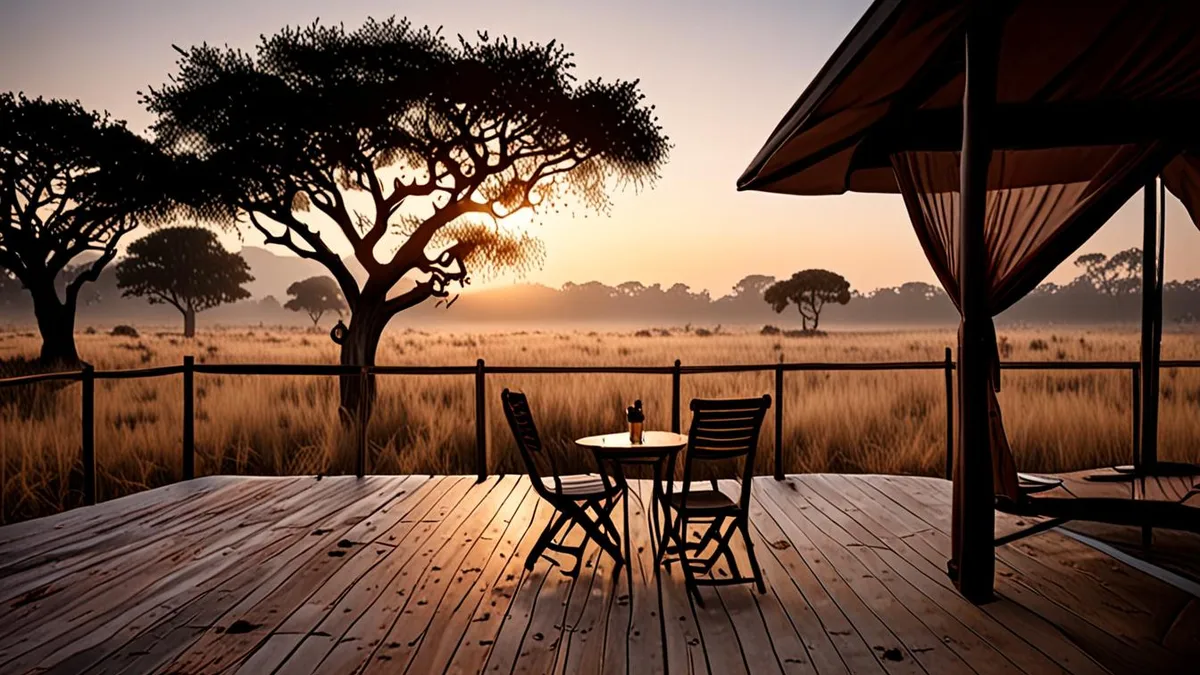
The Clothing Checklist: Layers for a Luxury Glamping Trip
Building Your Luxury Glamping Wardrobe
Layering is the backbone of a luxury glamping wardrobe. Mornings and evenings call for three layers: a breathable base, an insulating fleece or merino mid-layer, and a windproof shell. By midday, strip back to one breathable layer as temperatures climb. Choose pieces that combine well so you’re never stuck with a single bulky outfit.
Color matters more than most travelers expect. Neutral earth tones are the standard at safari camps, where bright or pale clothing can spook wildlife and stand out on game drives. Avoid white, which shows dust within an hour, and skip dark blue or black in East Africa, where they attract tsetse flies. A stay at a luxury tented camp in the Maasai Mara like Mara Plains, with its daily game drives, rewards a wardrobe built around olive, khaki and sand shades.
Most luxury camps also expect neat evening dress at dinner, so pack one smart-casual outfit that works with a light jacket. Keep it wrinkle-resistant and versatile enough to wear twice.
- Footwear: bring broken-in closed shoes for walks and game drives, plus sandals for around the tent and pool, and never debut new boots on a multi-day trip.
- Quantity: pack for 3-4 days rather than the full trip length, since most luxury camps offer laundry service, often turning items around within a day.
- Accessories: a light scarf or buff doubles as dust protection on open vehicles and warmth around the campfire, and it weighs almost nothing.
- Sleepwear: tents can stay cool overnight even in warm regions, so pack warm pajamas or a lightweight thermal set for sleeping.
Bags, Luggage Limits and Camp Transfers
The single biggest packing mistake on a glamping trip is bringing the wrong bag. Many luxury camps, especially those reached by light aircraft or long 4×4 transfers, simply cannot load a hard-shell suitcase. A soft-sided duffel is the standard because it flexes into tight cargo pods and trailer racks, and most operators enforce a soft-bag limit of 15 kg. Check your specific camp’s transfer details when you book, as smaller aircraft can sometimes ask for even less.
Think of your luggage in two tiers: one main duffel that stays in your tent, and a small daypack that travels with you. The daypack carries your camera, sun hat, water and windproof shell on game drives and excursions, so it needs comfortable straps and a few zip pockets rather than anything fancy.
- Dry bag or dust cover: fine dust works its way into every zip and port on safari tracks and desert roads, so seal cameras, lenses and phones in a padded dust-proof pouch or dry bag between outings.
- Packable spare bag: a foldable duffel that weighs almost nothing gives you room for souvenirs on the return leg without breaking the soft-bag rule.
- Luggage tags and cable ties: bags get stacked and shuffled between vehicles and planes, so a bright tag and a couple of ties keep zips shut and your bag easy to spot.
- Small padlock: useful for the zips of your duffel and daypack during long transfer days when bags travel out of sight.
Finally, treat your hand luggage as an insurance policy. On multi-leg trips it is common for the main duffel to travel separately from you and arrive at camp hours later, or the next morning. Keep passports, medication, electronics, documents and one full change of clothes with you, so a delayed bag is an inconvenience rather than a crisis.
Toiletries, Health Kit and Sun Protection
Here is where glamping rewards light packers. Quality luxury camps supply proper hotel-style toiletries in the tent: shampoo, conditioner, soap, body lotion and, in most safari and desert camps, insect repellent as well. Full-size bottles are dead weight in a 15 kg duffel, so leave them at home and bring only travel sizes of anything specific you prefer, such as your own toothpaste or a particular facial product.
Sun protection is the one category where you should not compromise. Days in open safari vehicles and desert camps mean hours of reflected glare and wind, and a standard moisturiser with SPF will not cut it. Pack a dedicated high-SPF sunscreen, an SPF lip balm, polarised sunglasses and a wide-brim hat with a chin cord, which survives open-vehicle winds far better than a floppy brim.
- Rehydration salts: long, hot days dehydrate you faster than you notice, and sachets mixed into water help far more than extra glasses alone.
- Antihistamine tablets and cream: useful for insect bites, stings and unexpected plant or dust allergies far from a pharmacy.
- Motion-sickness tablets: corrugated dirt tracks and swaying 4x4s bother many travelers who are fine on paved roads, so pack them even if you rarely need them at home.
- Prescription medication in original packaging: bring the full trip plus a little spare, with the labeled box or a doctor’s note to avoid questions at remote checkpoints.
- Basic blister plasters and antiseptic wipes: new walking sandals plus dusty trails are a classic combination for sore feet.
One environmental note: if your camp sits in a protected desert or marine area, choose biodegradable soap and reef-safe sunscreen only, and check the camp’s guidelines before you go. Regular sunscreen washes off into water systems that protected areas are specifically designed to keep clean.
Tech, Power and Practical Extras
Power is the quiet surprise of luxury glamping. Tents may have plug sockets, lights and even Wi-Fi routers, but many remote tented camps run on generators with limited charging hours, often switching them down overnight. A universal travel adapter and a decent power bank are therefore essential, and a power bank with enough capacity for several phone charges earns its place in your daypack on long drive days.
For photographers, dust is the real enemy. Fine sand and grit find their way into lens barrels and battery compartments, so bring a dust-proof camera bag or insert, a blower and cleaning cloth, and a zoom lens so you are not swapping lenses on open vehicles. Camps often provide shared binoculars, but if you are particular about optics, bring your own compact pair.
- Head torch with red-light mode: paths between tents are unlit by design, and red light lets you walk to dinner without dazzling other guests or disturbing wildlife.
- Spare memory cards and batteries: there is no shop at camp, and animals rarely appear when your battery is at ten percent.
- Multi-port USB charger: with limited socket time, charging two or three devices at once makes the most of every generator hour.
- Short charging cables: easier to manage in a tent and less likely to snag or collect dust than long leads.
Connectivity is another place to manage expectations. Wi-Fi at remote camps is often patchy, slow or limited to the main lodge area. Download offline maps for your region, load entertainment for transfer days, and carry a printed copy of your booking confirmation and camp contact details. If your phone is your only map and your only ticket, a dead battery in a signal-free valley becomes a real problem rather than a minor annoyance.
Final Checklist Summary
The answer to the packing dilemma is simple: pack for the wilderness, but borrow the comfort. A luxury glamping trip needs a three-layer clothing system, a soft duffel under 15 kg, solid sun and insect protection, and a few compact tech extras. That covers the gap between a backpacker’s kit and a city suitcase without landing in either camp.
Let the destination and season drive the details. Desert layers for October to April, a fleece for cold safari dawns, swimwear for coastal camps. Rely on the camp-provided toiletries and laundry service to keep your bag light and your stay comfortable, and you will arrive prepared rather than overloaded. If this checklist helped you sort your own bag, leave a comment or share the article with a fellow traveler.