Scrolling through a booking page, you find three room types: deluxe, premier and club. The prices climb, the photos look nearly identical, and you start to wonder whether “deluxe” simply means the same room with a better word attached. Many travelers have paid extra for a category name and arrived to find a room that looks exactly like the cheapest one in the corridor.
This guide breaks down how hotel room categories actually work, so you can decide where an upgrade earns its price and where it does not. We will cover what labels like standard, deluxe and junior suite really describe, when a view or high floor is worth paying for, when a suite makes sense, and how heritage, club-level and family categories differ. We will also share timing tips for booking and asking for upgrades. By the end, you will compare square meters and layouts instead of trusting a name.
What Hotel Room Categories Actually Mean
The names on a booking page sound like a quality ladder, but they usually describe size and position instead. In most full-service hotels, a standard room measures 25-35 square meters, and a deluxe room is often just 3-5 square meters larger or sits on a higher floor. The beds, bathroom fittings and amenities are frequently identical. Before paying for the next tier up, treat the label as a hint, not a promise.
Run-of-house: the cheapest option with a catch
Run-of-house bookings let the hotel assign any standard-level room at check-in. You get the lowest rate, but you give up control over the floor, the view and sometimes the bed configuration. If you sleep lightly or care about where you end up, this is rarely the right trade. If you genuinely do not care, it is a simple way to save.
When “suite” really means a suite
Suite categories are the one place where the name carries real meaning: a suite includes a separate living space. A junior suite of 45-55 square meters is a genuine layout change, not a marketing label, because you get a distinct area to sit, work or spread out. Suites typically start around that size and can exceed 100 square meters in luxury properties.
The habit that saves the most money is simple: always open the room-category details and compare square meters and bed sizes instead of trusting the name. Two “deluxe” rooms at the same hotel can differ by several square meters, and a “superior” room can sometimes be larger than the “deluxe” one. Five minutes of reading the fine print beats a surprise at check-in.
Views and Floor Levels: Paying for the Window
View categories such as ocean, oasis, garden or skyline can add 10-30% to the rate, so the first question is honest self-assessment: will you actually be in the room at view hours? If you leave at sunrise for tours and return after dark, you are paying a premium for a window you will only see while brushing your teeth. If you linger over morning coffee or unwind with the curtains open, the upgrade can define the whole stay.
There is also a sequencing trick that saves money. A high-floor request is often free to add at booking, while a named view is a paid category. Secure the floor first, then decide whether the view itself justifies the extra cost. And do not overlook corner rooms: they give you two-window light and more privacy, and they are usually a distinct category worth choosing over a mid-floor standard room.
Some destinations make the view the whole point of the trip, and there the upgrade is easy to justify. A few examples:
- Desert resorts, where an oasis-facing room puts dunes and sunset light outside your window instead of a car park — oasis view rooms near Abu Dhabi’s Liwa desert are a good example of this category done well.
- Beach and island properties, where an ocean-view category lets you watch the water from bed rather than walking to it.
- Lake and mountain destinations, where the scenery changes through the day and a lake-facing room turns downtime into part of the experience.
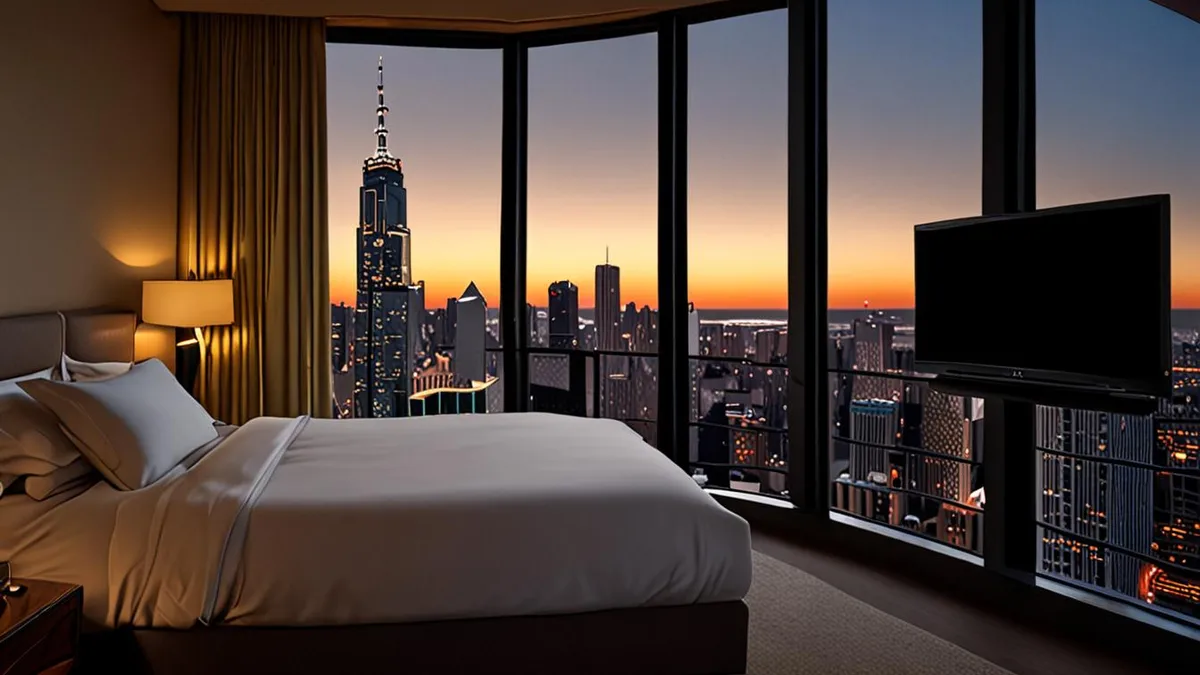
- City skyline stays in high-rise hotels, where a skyline category on a high floor delivers a night view that a low-floor room cannot match at any price.
Where the view is the destination, buy it deliberately. Where it is decoration, keep the money and book the standard category.
When a Suite Is Worth It and When It Is Not
A suite earns its price in three situations. First, stays of three nights or more: the extra living space changes how you use the room, giving you somewhere to sit that is not the bed. Second, working trips that need a separate living area, so your laptop and your evening do not share one desk-dining-bed combo. Third, when traveling with a companion who keeps different hours — one person can read or work in the living space while the other sleeps.
The junior suite sweet spot
Before jumping to a full suite, look at the junior category. A junior suite at 45-55 square meters often costs less than a full suite and delivers most of the extra space benefit. You typically get an open-plan living corner rather than a fully separate room, but for most travelers that distinction matters far less than the price gap. Check the exact layout in the category details, because junior suites vary widely between properties.
When a standard room wins
For one- or two-night city stays, a well-located high-floor room usually beats a suite located on a low floor near the lifts. You will barely unpack, you will not use the living area, and position within the building matters more than square meters. Spend the difference on a better location or a longer trip instead.
There is one more case worth considering: design-led suite categories such as minimalist or art-themed suites trade pure square meters for atmosphere. If your trip is design-focused, properties like The Chedi Muscat in Oman with its minimalist luxury suites show how the category itself becomes part of the experience. For a design-led trip, that can be the right trade; for a family with luggage, it rarely is.
Themed and Heritage Room Categories
Some hotels sell room categories that are tied to the building itself or to the land around it. Think heritage rooms inside a restored historic property, or cliffside and garden suites where the setting is the product. In cities with old quarters, this is especially common — you can see it in places like Doha, where boutique hotels around Souq Waqif sell heritage rooms built into traditional architecture (for a closer look, read our guide to heritage rooms in Doha’s souq hotels).
Heritage categories trade modern uniformity for character. That is usually a good deal, but it comes with quirks: original layouts can mean odd-shaped rooms, narrow doorways, windows in unusual places, or bathrooms tucked into converted corners. Check the photos and the stated room dimensions carefully before booking, because a charming heritage room can also be a small and awkward one.
Setting-based categories deserve special attention. A garden, cliffside or harbor suite changes the entire feel of a stay — you step outside into the reason you came. When a hotel offers both an interior upgrade (a slightly plusher standard room) and a setting-based category, the setting usually delivers more value for your money.
- Read recent guest reviews that mention the exact category name, not just the property overall — the same hotel can have both its best and most dated rooms under one roof.
- In heritage properties, the oldest rooms are often the cheapest category, so a low rate can be a signal to look at photos extra carefully rather than a bargain.
- Ask the hotel directly whether a heritage category has been recently renovated; restoration work is often done in phases, and the answer varies room by room.
- If stairs or lifts matter to you, confirm how the original layout affects access — historic buildings frequently have rooms reachable only by staircases.
Club Levels, Family Layouts and Special Categories
Club or executive-floor categories typically cost 20-40% more than the standard category, and what you are really buying is lounge access. The math only works if you will genuinely use the lounge daily — breakfast there, afternoon coffee, evening drinks and light bites. If you plan to eat out every morning and evening, that extra money buys little more than a floor you will barely see. Business travelers who work from the lounge in the mornings get the most out of these categories.
Family layouts need early planning
Interconnecting rooms are some of the scarcest inventory in any hotel — often fewer than 5% of rooms in a property. Hotels cannot simply “find” another one at check-in, so families should book this category 2-3 months ahead and then confirm it directly with the property before arrival. A written confirmation of the interconnecting category is worth the extra email. It also helps to spell out the exact bed configuration you need, since two rooms that technically connect may still sleep the wrong combination of adults and children for your family.
Special categories are bookable, not add-ons
Accessible rooms, spa-access categories and pool-suite types are separate bookable categories, not requests you can bolt onto a standard booking. Filter for them at the search stage, because a hotel’s accessible room may differ from its standard rooms in layout, size and even floor. If accessibility matters, book the specific category rather than hoping the front desk can move you. Ask the hotel directly about door widths, grab bars and roll-in showers, since category names rarely reveal these details.
At the very top in resort cities sit sky-pool and private-pool suite categories. These are spectacular when the weather cooperates — and a very expensive wet tile when it does not. Before booking, check whether the pool is realistically usable in your travel season, including whether it is heated or shaded. It is also worth asking whether the pool is private to your terrace or shared with neighboring suites, because photos can make a shared plunge area look far more exclusive than it is.
Timing Your Booking and Upgrade Strategy
When you book matters almost as much as what you book. Room category inventory is finite, and the most desirable options disappear first, so a little timing strategy gets you a better room for the same or less money. The good news is that it requires no insider knowledge — just a clear order of operations and a realistic view of what the front desk can and cannot do for you.
- Book early, online. This gives you the full category list at published rates. High-floor and corner rooms are the first to sell out, so waiting usually means choosing from what is left rather than what is best.
- Compare the price gap between categories at booking time. A view upgrade that adds 10-30% to the rate is usually cheaper bought online than the same upgrade quoted at the front desk, where walk-up upgrade prices tend to be higher.
- Time your arrival for upgrade luck. Midweek arrivals in shoulder season are your best chance of a free category upgrade at check-in. When you ask, be polite and specific — “a high-floor corner room, if one is available” works better than a general request.
- Use loyalty status and direct booking. Both often unlock complimentary category moves. When the gap between your category and the next one up is small, book direct and let status do the negotiating for you.
Put together, the strategy is simple: lock in the specific category you actually want early and online, then treat the check-in desk as a bonus opportunity rather than your main plan. That way a free upgrade is a pleasant surprise, not something your stay depends on. And if the desk says no, you have still secured the room type that fits your trip — which matters far more than any last-minute gamble at the counter.
Wrapping Up Your Room Category Choice
Those vague labels on booking pages make sense once you strip them down to what they actually sell: size, position, view and layout. A deluxe tag means little on its own, so open the details and compare square meters and floor level before you trust the name. If a premium category is not clearly bigger, better placed or facing something you care about, the cheapest option is usually the smarter one.
Then match the category to the trip itself. Views and suites earn their price on longer, scenic stays where you will actually spend time in the room, while a smart standard room wins for short city nights. Book 2-3 months out for the widest choice, buy upgrades online when the gap sits around 10-30%, and save your polite desk negotiation for a shoulder-season, midweek check-in. If this guide helped you pick your next room, leave a comment or share it with a fellow traveler.