Scrolling through photos, safari tents vs yurts vs dome tents can all look equally dreamy: king beds, wood stoves, panoramic decks. But these three styles behave very differently in the real world. A canvas yurt that feels magical in cool mountain air can turn stuffy in a desert, and a dome built for stargazing may be miserable in a rainy season. Choosing the wrong one for your destination and the time of year can quietly ruin an otherwise well-planned trip.
This guide breaks the decision down clearly. We compare structure and comfort across the three styles, show where each one works best, and explain what you actually get for the money at different price points. You’ll find guidance on weather and booking windows, a section matching each style to your trip type — wildlife, romance or family — plus the common booking mistakes travelers make with tents and yurts. By the end, you’ll know exactly which one to book.
Safari Tents vs Yurts vs Dome Tents: Structure and Comfort
The three styles look similar in photos but are very different under the canvas. Safari tents are large, fixed canvas suites set on solid decks, typically 40-100 sqm. Inside you’ll find real beds, full en-suite bathrooms and a covered veranda, so the experience is closer to a hotel room with canvas walls than a tent.
Yurts are circular structures built from a wooden lattice frame covered in canvas, usually 20-50 sqm, with a central dome skylight that floods the space with daylight. Depending on the camp, you may have a private bathroom or share a bathhouse a short walk away.
Dome tents: compact and sky-facing
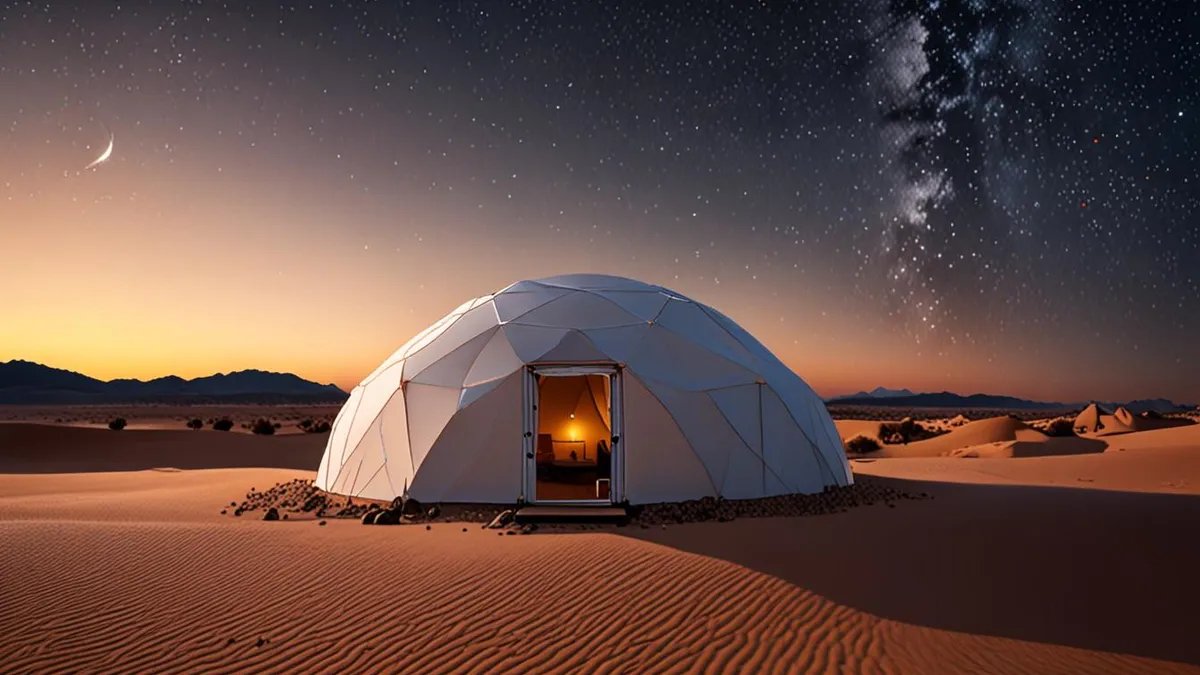
Dome tents are geodesic structures of roughly 15-40 sqm, often fitted with transparent roof panels so you can watch the sky from bed. Interiors range from simple camping setups to fully furnished suites, so check what your specific site includes before booking.
Insulation is where the three differ most. Domes can overheat at midday when sun hits their panels directly, yurts handle cold well thanks to their insulated round shape, and safari tents offer the best airflow in hot climates, with mesh panels and wide openings that catch the breeze.
Where Each Glamping Style Works Best
Each structure earns its keep in a specific landscape, and choosing the right pairing makes a real difference to your trip. Safari tents suit savanna and bush settings such as Kenya, Tanzania and Rwanda, where raised decks keep you above wildlife paths and wet ground. Yurts perform best in mountain, steppe and cool-climate destinations, where their insulated round shape stands up to wind and cold. Dome tents shine in deserts and remote outback locations, where clear skies turn the transparent roof panels into a stargazing window over the dunes.
A few practical patterns are worth knowing before you choose:
- Coastal camps favour safari tents: the roll-up canvas sides create cross-ventilation that sea breezes turn into natural air conditioning, which fixed-walled structures can’t match.
- Domes struggle in humid tropics: condensation forms on the curved shell and transparent panels in moist air, so you’ll rarely find them in rainforest or beach settings.
- Yurt sites cluster at altitude: mountain passes and open steppe are exactly where a drafty rectangular tent would fail, but a rounded, insulated yurt holds heat through cold nights.
- Deck height matters on safari: an elevated platform keeps your belongings dry after storms and gives you a safe vantage point when animals wander close after dark.
It also pays to think about how the structure behaves across the seasons you plan to travel. Lighter canvas structures, including many yurts and domes, are usually closed or limited during rainy seasons, so a camp that looks perfect in photos may simply not operate when you arrive. Safari tent camps tend to have the longest operating windows, but remote sites still check weather before confirming your dates. Ask each operator directly about seasonal openings, and get the answer in writing before you pay a deposit.
Match the structure to the terrain and the season, and you’ll avoid the most common mismatch: a style built for one climate dropped into another.
Price Ranges and What You Get for the Money
The price gap between these three styles is wide, and it helps to know exactly what you’re paying for before comparing nightly rates. East African safari tent camps during the June-October dry season typically run roughly $800-2,500 per night, and that rate usually includes meals, game drives and drinks. You’re paying for the guiding, the location and the staff as much as the canvas. Camps like Serengeti Bushtops with its private safari tents sit at the top of that range, where the rate covers a full luxury experience from wake-up call to sundowners.
The budget tier
Yurts and domes are the budget-friendlier option, typically $150-600 per night. Read the inclusions carefully, though: meals, hot tubs and guided activities are often charged separately, so a $200 yurt can creep toward double that once you add dinner and a tour. Ask the host for a sample total for your exact dates, including any cleaning fees or minimum-stay requirements, before you commit. Some yurt and dome sites also charge per person rather than per structure, which changes the math for couples versus solo travelers.
Watch the hidden extras
All-inclusive safari rates still hide real costs. Park and conservation fees, internal light-aircraft flights and premium drinks can add hundreds of dollars per person, so always compare the total trip price rather than the nightly rate. Park and conservation fees change regularly, so check the current rate with your operator or the park authority rather than relying on older blog posts. Flying into a remote camp usually means a scheduled light-aircraft seat booked alongside your tent, and those seats sell out in high season.
One useful trick: shoulder-season safari rates can drop 20-40 percent while you get the same tent and the same guides, just fewer crowds and greener landscapes. If your dates are flexible, ask camps directly about low-season specials or extended-stay discounts. For yurts and domes, weekday nights are often cheaper than weekends, especially at popular desert and mountain sites, and booking midweek can also mean a quieter property with more attentive hosts.
Weather, Seasons and When to Book
Glamping is seasonal in a way ordinary hotels rarely are. Canvas structures depend on dry ground, moderate temperatures and reliable access roads, so the calendar matters as much as the price. A tent that looks idyllic in photos can be a sweaty greenhouse in the wrong month or an unreachable mud trap after heavy rain. Timing also affects your wallet: the same camp can charge dramatically different rates depending on when you arrive. Before you fall in love with a particular property, work out which weeks actually suit its structure and location. Here is how to time each style of stay.
- Book safari tent camps 6-12 months ahead for the Great Migration. The July-September window in the Serengeti-Mara ecosystem is the busiest period of the year, and the best-located camps fill first. If you want a river-crossing position, reserve as early as the camp opens its calendar.
- Choose October to April for desert dome stays. Cooler months make transparent-roof domes genuinely enjoyable, and stargazing is at its best on clear desert nights. In summer, midday temperatures turn those same roof panels into a greenhouse, so avoid the hottest months entirely.
- Plan yurt trips between late spring and early autumn. Mountain and steppe yurt camps typically operate only in this window, since cold, wind and snow make the season impossible outside it. Confirm the camp’s exact opening and closing dates.
- Check camp opening dates, not just high season. Heavy rains force canvas camps of all three types to close or run a reduced service. A destination can be technically “open” while the camp you want is not.
Desert destinations show this clearly: a stay like Longitude 131 in Australia with its Uluru view tents is planned around cool-season comfort rather than year-round availability. The lesson applies everywhere. Safari tent camps in East Africa cluster their best game viewing around the June-October dry season, while yurt operators in mountain regions often shut down entirely once snow arrives. Lighter canvas structures simply cannot promise the year-round reliability of a brick-and-mortar hotel, so flexibility in your dates gives you more choice and often better rates. Wherever you book, ask the camp directly for its operating dates before you lock in flights, and build a buffer day into your itinerary in case weather delays a transfer.
Choosing by Trip Style: Wildlife, Romance or Family
The right tent depends less on the destination and more on what kind of trip you are taking. A structure that is perfect for a honeymoon can be a poor fit for a family of four, and vice versa. Before you fall in love with photos of a canvas suite or a stargazing dome, ask yourself what you actually want from the stay. Match the style to your priority first, then narrow down by location and season.
Wildlife-focused travelers should put safari tents at the top of the list. The combination of private verandas, camps positioned where animals pass at dawn, and guided game drives included in the rate is hard to beat. Couples chasing scenery and privacy often lean toward dome tents, where you can lie in bed under a transparent roof, or toward yurts for a cozy, secluded mountain setting. Neither option tries to replicate a safari lodge, and that is exactly their appeal.
- Families: multi-room safari tents on raised decks offer the most space and the safest setup with children, since the deck keeps you above ground level. Domes rarely fit more than two adults, so families often need to book two units, which quickly changes the total cost.
- Desert scenery seekers: places like AlUla pair dome and villa-style stays with dramatic canyon scenery rather than game viewing. A glamping villa stay such as Caravan by Habitas AlUla in Saudi Arabia shows how canyon landscapes replace safari drives as the main attraction.
- Short breaks: domes and yurts suit stays of 1-2 nights, since the experience is about the structure itself. Safari tent trips work best as part of a 3-5 night circuit, moving between camps to see different habitats.
If you are unsure, write down your single biggest priority, whether it is animals, romance or space, and let that decide the structure before you compare rates. It also helps to be honest about comfort needs: travelers who struggle without solid walls and reliable climate control should weigh that carefully. A short email to the camp asking direct questions about bathrooms, heating and layout will save disappointment later, and most operators answer quickly and candidly.
Common Booking Mistakes with Tents and Yurts
Glamping bookings go wrong in predictable ways, and almost all of them are avoidable with a couple of emails before you pay. Canvas accommodation is not a hotel room, and the differences catch first-timers off guard. A safari tent may photograph like a luxury suite, but it still has fabric walls, and a yurt or dome may sit at the far end of a field from the nearest toilet. Here are the mistakes worth avoiding.
- Assuming air conditioning comes standard. Many safari tent camps rely on ceiling fans and open canvas walls for cooling, and most yurts have neither AC nor heating in shoulder months. Ask specifically what climate control exists in the month you travel, and whether extra blankets or hot water bottles are provided for cold nights.
- Overlooking the bathroom setup. Some yurt and dome sites use shared bathhouses a short walk away, which changes the experience considerably at night or in cold weather. Confirm en-suite facilities in writing before booking if a private bathroom matters to you, and ask whether hot water is available around the clock or only at set hours.
- Ignoring camp accessibility. Remote safari tent camps may require light-aircraft transfers, and these usually need to be booked at the same time as the tent. Leaving transfers until later can mean the camp is available but the seats are not. Also ask about luggage limits on small planes, which are often stricter than on commercial flights.
- Packing wrong. Canvas walls mean noise travels between tents, and temperatures commonly swing 10-15 degrees between day and night. Bring layers for morning game drives, earplugs for thin walls, and a flashlight for camps lit by lanterns rather than full power. Closed shoes help too, since canvas floors and decks can get chilly or dusty.
None of these issues are dealbreakers once you know about them in advance. A short message to the camp or your tour operator covering cooling, bathrooms, transfers and packing advice will prevent nearly every unpleasant surprise. Ten minutes of questions is far easier than a cold, noisy or badly planned night under canvas.
The Bottom Line
So which should you book? Start with your destination and season, then let the structure follow. If your heart is set on game viewing in Kenya, Tanzania or Rwanda, a safari tent is the natural pick: you get the most space and comfort, and the elevated deck puts you safely above wildlife and wet ground. Because the best camps fill fast, plan ahead and book 6-12 months out if you want the dry season, when wildlife viewing is at its peak and the canvas stays dry and comfortable.
Travelers heading to cooler climates should look the other way. Yurts suit mountain and steppe settings, where their insulated circular design handles wind and cold far better than flat canvas walls. They also come at a friendlier price point, typically $150-600 per night, which makes them a smart choice if you want a memorable stay without the top-tier rate. Just confirm what the rate includes, as meals and activities are not always bundled in.
For desert trips, dome tents are hard to beat between October and April, when nights are cool and skies are clear enough to make the transparent roof panel genuinely magical. Outside that window, the same roof can turn the interior into an oven, so timing matters more than anything else here.
One final check before you pay: confirm the camp’s exact operating dates. Yurts and domes, with their lighter canvas, are usually closed or limited in rainy seasons, and a camp that looks open online may not be running when you plan to travel. Match the structure to the destination, the season and your trip style, and you are far less likely to end up sweating under a clear roof or shivering in a summer-only camp. If this helped you decide, leave a comment or share the article with a fellow traveler.