Choosing between a beachfront villa or cliffside villa is one of the biggest decisions you’ll make when booking a luxury coastal escape. One puts you steps from the sand, able to wander out for a swim before breakfast. The other lifts you high above the water, trading easy access for sweeping panoramas and a sense of seclusion that sea-level rooms rarely match. Both are tempting, and both come with real trade-offs that aren’t always obvious from glossy photos.
This guide breaks the choice down side by side. We’ll compare the core differences at a glance, then look at views and privacy, beach access and daily convenience, and the weather and comfort quirks each position brings. We’ll also cover price and value, including when to book for the best rates, and finish with traveler scenarios so you can match the villa to your priorities. By the end, you’ll know exactly which type suits your trip.
Beachfront Villa or Cliffside Villa: The Core Differences at a Glance
The fundamental difference comes down to position. A beachfront villa sits at sea level with direct access to the sand, so your terrace, plunge pool or bedroom doors open onto the beach itself. A cliffside villa trades that access for elevation: you’re perched above the water, often with dramatic views that stretch far along the coastline.
That single difference shapes almost everything else about your stay. Beachfront villas put you in the thick of the action, close to swimming, water sports and beach bars. Cliffside villas create a quieter, more removed atmosphere, where the main event is the view rather than the shoreline.
Who each type suits best
Beachfront villas are a natural fit for swimmers and families with children, since the water is a short walk away and no stairs or shuttles stand between you and the sand. Cliffside villas tend to suit couples and view-seekers who value privacy, sunsets and that elevated feeling of being above it all.
On price, both positions command a premium over standard rooms in the same resort. However, beachfront typically runs 10-25% higher than comparable cliffside units, reflecting the strong demand for sand-at-your-doorstep access. Check the exact gap for your chosen resort and dates, as it varies by property and season.
Views and Privacy: Where Each Villa Type Wins
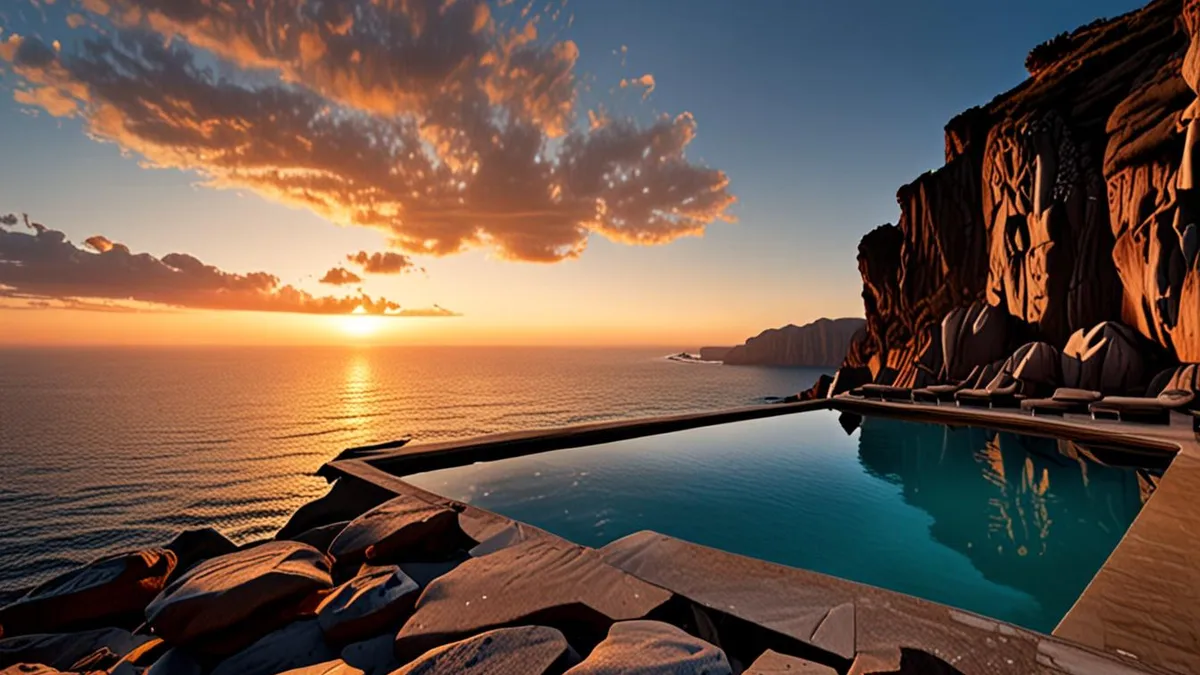
This is where cliffside villas genuinely shine. Sitting 30-100 meters above the water, they deliver unobstructed sea panoramas that often span 180-270 degrees. There’s nothing between your terrace and the horizon, so sunrises, sunsets and passing boats all play out in full view. Many cliffside properties lean into this, framing the vista with infinity pools and glass-walled living spaces.
Beachfront villas have water views too, and arguably more intimate ones, since you can watch waves break just meters away. The trade-off is that sea-level positions often face shared walkways, neighboring sun loungers or beach facilities. Depending on the layout, you may find guests passing your terrace or settling onto loungers within your sightline.
Elevation also brings natural privacy. Cliff positions shield terraces and pools from other guests simply because few people wander up there, and sightlines from the beach or pool areas rarely reach the cliff edge. If privacy matters to you, ask how the villas are oriented before booking. For a sense of what’s possible at altitude, our review of Anantara Al Jabal Al Akhdar’s cliffside villas in Oman shows how dramatic an elevated setting can be.
- Angle of view: Cliffside terraces can capture both sunrise and sunset over the water when the coastline curves, something sea-level villas rarely manage.
- Sound of the sea: Beachfront villas deliver the soothing crash of waves right at your door; cliff villas trade that for quieter, windier evenings.
- Photo opportunities: Elevated positions let you shoot down into turquoise water, giving drone-like perspectives without a drone.
Beach Access and Daily Convenience
Daily convenience is the beachfront villa’s strongest card. From your door to the sand is usually under 2 minutes on foot, which changes the rhythm of your whole trip. You can swim early, return for breakfast, head out again before lunch and still fit in a late-afternoon dip, all without planning anything. For families with young children, that easy in-and-out access makes beach days far simpler, since forgotten toys, snacks and naps are only steps away.
Cliffside villas ask more of you. Many sit 30-100 meters above the water, reached by lifts, funiculars or 100-300 stair steps. Even then, some properties are set apart from the shoreline, so guests often need shuttle rides of 5-10 minutes to reach the beach. None of this is a dealbreaker if you’re mainly there for the view, but it does mean every swim becomes a small expedition rather than a spontaneous decision.
What’s on your doorstep
Beachfront locations also tend to put the resort’s social life within walking distance. Restaurants, water sports huts and beach bars cluster along the sand, so lunch, a kayak session or a sunset cocktail rarely requires transport. If you’d like to see how this works in practice, our review of The Ritz-Carlton Al Hamra Beach and its private beach villas in the UAE covers a property built around that sand-side convenience.
Weather, Comfort and Practical Drawbacks
Temperature and breeze are where the two villa types genuinely diverge. Cliffside villas typically sit a few degrees cooler than sea level, with stronger breezes flowing up from the water. In the height of summer this feels like a gift: you can sit on your terrace at midday without melting. On winter evenings, though, that same airflow can turn a dinner on the terrace into a jacket-and-blanket affair.
Beachfront villas trade that breeze for warmth and humidity. In tropical destinations, the combination of sea-level moisture and warm sand is most noticeable from June to September, and sandflies tend to appear in the same window, especially around dusk near vegetation. If you are prone to insect bites, pack repellent and ask whether the resort treats the grounds.
Noise follows elevation in opposite ways. Sea-level villas can catch sound from beach parties, weddings and water sports right outside their doors. Cliff villas escape the beach crowd but can suffer from wind rattling furniture and umbrellas on exposed terraces at night. Resorts built into dramatic terrain, such as those described in Six Senses Zighy Bay Oman with Mountain Beach Villas, show how mountain-backed sites can buffer wind while keeping the panorama.
- Ask about terrace orientation. A cliffside villa facing away from the prevailing wind keeps outdoor dining usable on gusty days.
- Check for screens or netting. Some tropical beachfront villas add insect screens to bedroom doors specifically for the sandfly season.
- Request a villa set back from the beach bar. Even a few rows back noticeably cuts music and event noise after dark.
Price, Value and When to Book
Price is one of the clearest differences between the two villa types. Within the same resort, beachfront villas typically sit at the top of the rate card, and the logic is simple: direct sand access is the scarcest commodity, and travelers pay for the ability to step from their terrace straight onto the beach. Cliffside villas, while often better in views and privacy, usually cost somewhat less than their beachfront equivalents. Check current rates with each resort, since premiums vary by destination and season.
Use the shoulder months to your advantage
If your dates are flexible, the shoulder months of April-May and October are where real value hides. Rates in these windows commonly drop 20-40% compared with peak season, while the weather in most villa destinations remains genuinely good. That discount can more than offset the beachfront premium, meaning you can sometimes book a top-category villa for what a mid-tier unit costs in high season.
How far ahead to book
Peak season inventory moves quickly, especially for the handful of true beachfront villas in any resort. For the Gulf, where peak season runs November to March, and for the Mediterranean, where it runs June to August, plan to book 3-6 months ahead. Earlier is better if you need connecting villas, a specific bedroom configuration or a villa with a private pool, since those features are usually limited to one or two units per resort.
How to Choose: Traveler Scenarios
The right villa depends far more on how you travel than on any general rule. A honeymoon couple and a family with toddlers can stay in the same resort and have completely different experiences depending on which side of the elevation line they book. Before committing, think honestly about your daily rhythm: how many times you will actually reach the beach, and whether you would rather look at the sea from above or be in it. It also helps to picture a normal day in the villa, from your first coffee on the terrace to your last swim, and ask which location would make that day easier rather than harder.
As a rule of thumb, swimmers and families gravitate to the sand, while couples celebrating something special gravitate to the cliffs. Neither choice is wrong, but mismatching your priorities to your villa type is the most common regret travelers report after a villa holiday. A little self-assessment before booking costs nothing; changing villas mid-trip rarely is.
- Families with small children: Beachfront wins because the sand is only a short stroll from your door, making it realistic to return to the villa for naps, forgotten toys and lunch breaks without a full expedition.
- Honeymooners and photographers: Cliffside delivers elevated panoramas and natural privacy, since terraces sit above neighboring villas and are shielded from passersby, ideal for sunrise shots and uninterrupted dinners.
- Travelers with mobility concerns: Contact the resort before booking any cliffside villa and verify exactly how it is reached, whether by lift, funicular or stairs, and how many steps are involved.
- Mixed groups: Some resorts let you book one of each type, so swimmers get the sand while the view-seekers get the panorama, and everyone meets for dinner in the middle.
The Bottom Line
So, which villa wins? If your perfect day means barefoot swims, quick beach trips and everything within walking distance, the beachfront villa justifies its typical 10-25% premium. If you care most about sweeping panoramas, natural privacy and cooler breezes, the cliffside option is the smarter pick.
The good news is that timing softens the decision: shoulder months like April-May and October trim rates on both types while the weather stays pleasant. In the end, the right choice simply comes down to your priorities — ease and sand underfoot, or views and seclusion. If this comparison helped you decide, leave a comment or share the article with a fellow traveler.