It happens more often than it should: you book a suite, arrive with visions of a separate living room, and find nothing but a slightly larger room with an extra chair. The hotel suite vs room question confuses a lot of travelers, partly because hotels use the word “suite” loosely and partly because the differences are rarely explained clearly.
This guide breaks down what actually defines a standard hotel room and a true suite, where categories like the junior suite fit in, and how prices compare between the two. You’ll also find practical advice on when a room is the smarter choice, when a suite genuinely earns its premium, and how to decide between them for your next trip. By the end, you’ll know exactly what to look for before you book.
What Is a Standard Hotel Room?
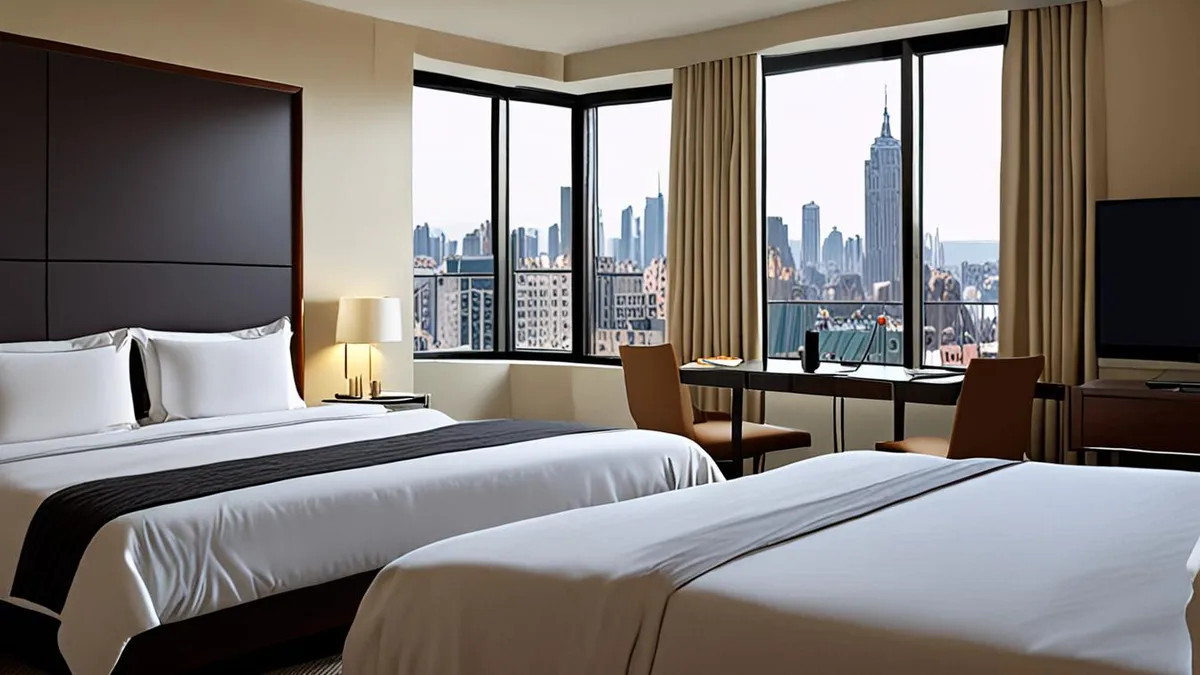
A standard hotel room is a single, open space where everything happens in one area: sleeping, working, getting ready and relaxing. The bed sits alongside a desk, and depending on the property, you may also find a small seating chair tucked into a corner. Most standard rooms typically range from 25 to 40 square meters, which is comfortable for one or two people but leaves little room to spread out.
The bathroom is usually en-suite, meaning it’s directly attached to your room rather than shared. In many hotels you’ll find a shower, while others offer a shower-over-bath combination, where a bathtub doubles as the shower base. If a long soak matters to you, it’s worth checking the room details before booking, as not every standard room includes a tub.
What you actually get in a standard room
Amenities tend to cover the essentials rather than extras. Expect a TV, a kettle or a small minibar, a wardrobe or closet for your clothes, and Wi-Fi, which is often included in the rate. Some rooms add a coffee maker or a safe, but the focus is on practicality, not luxury.
Standard rooms are best suited to short stays of one to three nights, especially when you plan to spend most of your time out exploring rather than in the room. If your itinerary is full of sightseeing, meetings or day trips, a well-located standard room gives you everything you need: a comfortable bed, a hot shower and a quiet place to sleep. The money you save compared to higher room categories can go toward experiences instead.
What Is a Hotel Suite?
A hotel suite is defined by one key feature: a separate living area that is distinct from the sleeping space. This separation is what sets a suite apart from a large room, and it’s the main reason true suites usually start around 45 to 50 square meters or more. Instead of working and relaxing on the edge of your bed, you get a dedicated space to sit, eat, entertain or simply stretch out.
What’s inside a typical suite
Beyond the extra space, suites often include furniture and equipment you won’t find in a standard room. A second TV in the living area is common, along with a dining table where you can eat room service or work with your laptop. Many suites also add a kitchenette with a sink, microwave and mini fridge, or a full bar area for making drinks. These touches make longer stays far more comfortable, since you’re not living out of a suitcase in a single room.
In luxury city hotels, suites commonly come with extras such as lounge access, turndown service and complimentary breakfast. These perks can add real value to your stay, particularly if the lounge serves food and drinks throughout the day. Always check what’s included in the rate, as the inclusions often matter as much as the space itself.
The main suite categories
Suites come in several categories, and the labels vary between hotels. Junior suites offer a taste of the suite experience in one open space, while one-bedroom suites provide a full wall and door between bedroom and living room. Two-bedroom suites work well for families or groups, and specialty themed suites offer distinctive designs for travelers looking for something memorable.
Junior Suite vs Full Suite: Where the Line Blurs
The line between a junior suite and a full suite confuses even experienced travelers, so it helps to understand exactly what separates them. A junior suite is one open space, typically around 35 to 45 square meters, with a sleeping corner at one end and a lounge area at the other. There is no dividing wall between the two zones, so you get extra room and a defined sitting area, but not true privacy between sleeping and living spaces.
A full one-bedroom suite, by contrast, has a physical door between the bedroom and the living room. That door changes everything if one person wants to sleep while another watches TV, works late or takes a call. For longer stays or trips with different daily schedules, this separation is often worth the higher rate.
Watch the labels before you book
Here’s the catch: some hotels market large rooms as “suites” even when there’s no separate living area at all. Before booking, check the floor plan and the square meters listed on the hotel’s website or booking platform. A floor plan showing one open rectangle with furniture zones usually signals a junior suite or a large room, while a plan with two distinct rooms and a door indicates a true suite.
When to consider two bedrooms
Two-bedroom suites sit at the top of the range and suit families or groups who need both privacy and a shared living space. Parents get a separate bedroom from the children, everyone can gather in the living room, and nobody has to whisper after bedtime. For group trips, splitting the cost of a two-bedroom suite between friends can sometimes work out comparably to booking multiple standard rooms, with far more shared space as a bonus.
Price Differences Between Rooms and Suites
Let’s talk numbers, because this is usually the deciding factor. In most properties, a suite costs 50 to 150 percent more than a standard room of the same hotel. That’s a wide range, and where you land depends on the property, the city and how big the gap is between their entry-level rooms and their top suite categories.
Timing matters more than most travelers realize. Booking a suite 2 to 3 months ahead often secures better rates than waiting for a last-minute upgrade at the front desk. Hotels manage suite inventory carefully, and early bookers tend to get the better rates, while same-day upgrades are unpredictable and can be expensive.
One thing I always tell readers: don’t compare the headline nightly rate alone. Suite rates frequently bundle in extras that you’d otherwise pay for separately, which changes the real value comparison. Check what’s actually included before you decide a suite is out of budget. A few things worth looking for:
- Complimentary breakfast — in a luxury city hotel this often comes via lounge access, so a family of two could save a noticeable amount on morning meals alone.
- Airport transfers — a private car pickup included in the rate can be worth more than it looks, especially in cities where taxis from the airport are pricey.
- Spa credit or dining credit — some suite packages include a credit toward treatments or dinner, which effectively lowers the true nightly cost if you’d use them anyway.
Finally, seasonality can work in your favor. During off-peak periods, the gap sometimes narrows to 30 to 40 percent above standard rooms, which is when I personally find suites most tempting. If your dates are flexible, compare suite prices in the quieter season before ruling them out.
When a Room Makes More Sense Than a Suite
As much as I love a good suite, there are plenty of trips where booking one is simply money spent in the wrong place. The clearest example is a short stay of one to three nights where the room is mainly for sleeping. If you’re checking in late, showering, sleeping and checking out after breakfast, that separate living area will sit there untouched — and you’ll have paid a meaningful premium for it.
The same goes for travelers who are barely in the hotel. Solo travelers and couples spending most of the day sightseeing don’t need extra square meters; they need a comfortable bed, a decent shower and reliable Wi-Fi. A well-chosen standard room covers all of that comfortably, and the money you save can go toward the trip itself.
City breaks deserve their own mention. In cities like New York, Paris or Tokyo, hotel rooms are compact and expensive by default, and location drives the price far more than in-room space does. A smaller room in a central neighborhood will usually beat a large suite an hour’s commute from everything you came to see. Ask yourself a few questions before booking:
- How many hours will you actually be awake in the room? If the honest answer is under two a day, extra space adds little.
- What does the suite premium buy elsewhere? The difference in price often covers a memorable dinner, a guided tour or an extra night somewhere else on your trip.
- Is the standard room well reviewed? A comfortable standard room in a great location beats a discounted suite with poor soundproofing.
None of this means standard rooms are the “budget” choice — they’re the practical one. Spend the savings on experiences, and the room becomes exactly what it should be: a place to rest well between adventures.
When a Hotel Suite Is Worth the Upgrade
Now for the other side of the coin. The single best case for a suite is a longer stay — five nights or more. When you’re somewhere for a week, having a separate living area genuinely changes how you feel at the end of the day. You can spread out, work at a table instead of the bed, and keep one space for relaxing and another for sleeping. That separation does wonders for both comfort and productivity.
Families have perhaps the strongest argument of all. In a standard room, everyone shares one space, which means lights out for the kids means lights out for the adults too. A two-bedroom suite solves this: children sleep separately from adults, and the shared living room gives everyone a common space for breakfast or downtime.
Special occasions are another natural fit. For honeymoons and anniversaries, the extra space and the little extras that often come with suites in luxury city hotels — think evening turndown, a dedicated lounge and breakfast included — turn a regular stay into something memorable. If you’re celebrating, mention it when booking; hotels sometimes add small touches. Consider the upgrade if any of these apply:
- You need to work during the trip — the living area doubles as a meeting or workspace, so video calls happen at a table rather than perched on the bed.
- You’re traveling with grandparents or friends — a two-bedroom layout keeps everyone together in one booking while preserving privacy.
- You’ll actually use what’s bundled in — if the included breakfast, lounge or credits match habits you already have, the effective price gap shrinks.
The simple rule I use: the longer the stay and the more people in the room, the more a suite earns its price. For a week-long family trip or a milestone celebration, that upgrade often ends up being the best value decision of the whole booking.
Choosing Between a Room and a Suite
So, which should you book? If you just need somewhere to sleep for a night or two, a standard room of 25 to 40 square meters does the job well. If you want a separate living area, more privacy and space to spread out, a true suite of around 45 to 50 square meters or more is worth the 50 to 150 percent premium, especially for longer stays, families or celebrations.
The key is to book with your eyes open. Because suite labels vary so much between hotels, always check the floor plan and square meters before paying, so you know whether you’re getting a real one-bedroom suite or simply a slightly larger room. Know what you’re paying for, and you’ll never feel short-changed at check-in again. Have a suite story of your own? Leave a comment or share this article.