Planning a safari brings up one big question early on: safari lodge vs tented camp — which one should you actually book? Many travelers assume a lodge means comfort and a tent means roughing it, but that picture is outdated. Modern versions of both can be genuinely luxurious, and the real differences lie in atmosphere, price, location and how close to nature you want to sleep.
This guide breaks down the comparison step by step. We start with the core differences in how lodges and tented camps are built, then look at comfort and atmosphere, and compare typical prices. From there, we cover the best seasons and booking windows, the location trade-offs that affect your wildlife viewing, and how to match the stay type to your travel style — whether you are bringing kids, celebrating a honeymoon or simply chasing that classic under-canvas feeling.
Safari Lodge vs Tented Camp: The Core Differences
The most fundamental difference comes down to construction. A safari lodge is a permanent building, typically made with stone, wood or thatch walls. That solid structure means full climate control, solid insulation and a feel closer to a traditional hotel, even in remote locations. Rooms are built to stay cool in the heat and warm on chilly mornings, without you noticing the weather outside.
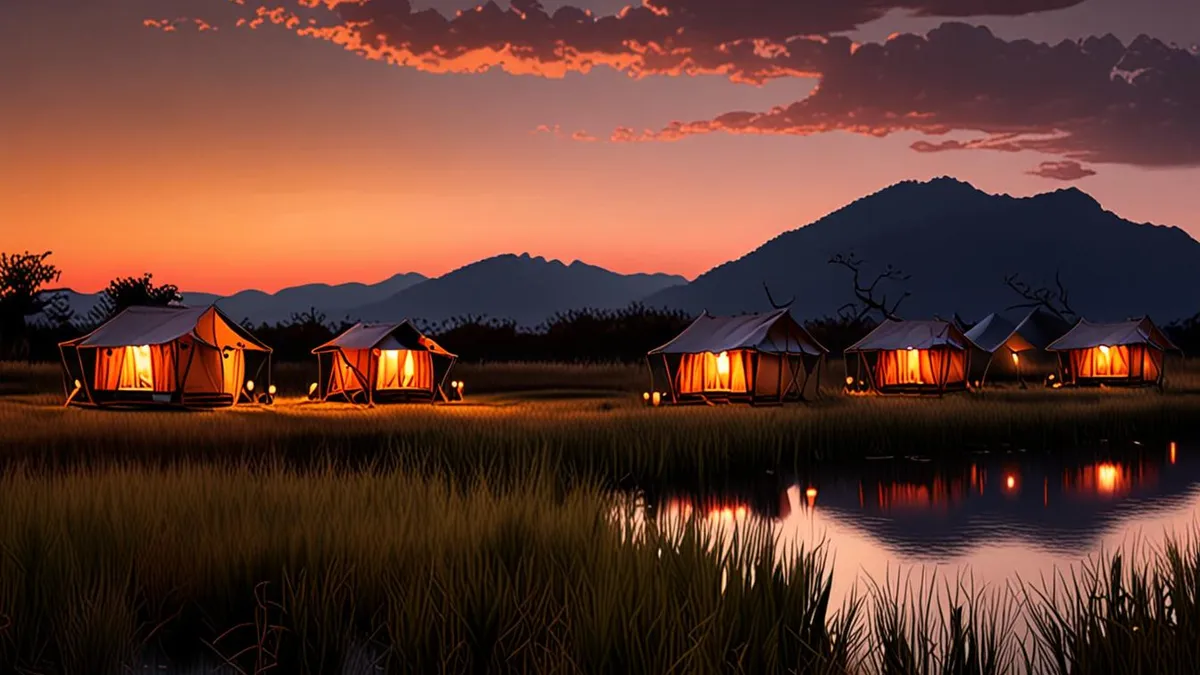
A tented camp works completely differently. Tents are raised on wooden platforms, with canvas walls, mesh windows and canvas roofs. The design is deliberate: the camp blends into the surrounding landscape rather than dominating it. Instead of blocking out the environment, canvas lets it in — sounds, breezes and all.
What both stay types have in common
Here is the part that surprises many first-time safari travelers: at the mid-range and luxury levels, the gap in basic comfort is small. Both stay types typically offer:
- En-suite bathrooms with flush toilets, hot showers and proper vanities
- Real beds — often large, comfortable ones with quality linens, not camping cots
- Daily housekeeping, so your room or tent is refreshed while you are out on game drives
In practice, the choice is less about roughing it versus comfort, and more about whether you prefer solid walls around you or canvas between you and the African night.
Comfort and Atmosphere: What Each Stay Type Feels Like
Step inside a lodge and you could be in a well-designed boutique hotel. Thick walls keep out both heat and noise, air conditioning takes the edge off the midday rest period, and the routine feels familiar: a proper room, a restaurant, a pool, and staff who appear when you need them. After a long, dusty game drive, that hotel-style predictability is exactly what many travelers want — especially on a first safari.
Tented camps trade that insulation for immersion. Canvas walls mean sound travels, and that is the whole point: falling asleep to distant lion calls or the whoop of hyenas is the memory many safari-goers treasure most. You are not imagining the wilderness — you are sleeping in it. If you want a sense of how luxurious canvas can get, take a look at this desert resort with safari-style villas, which shows just how far tented design has come.
The midday heat factor
One honest trade-off: canvas heats up faster than stone or thatch. During the hottest hours, a tent can feel warmer than a lodge room, which is why well-designed camps invest heavily in shade positioning, elevated platforms and good airflow. Fans are standard, some camps add seasonal cooling options, but full air conditioning is rare. If you are sensitive to heat or traveling in the hottest months, weigh this carefully — a lodge keeps its cool no matter what the sun is doing outside.
Price Comparison: What You Can Expect to Pay
Price is where the two stay types get closer than most travelers expect. Mid-range safari lodges typically run around $350–$700 per person per night, while luxury lodges start at roughly $800 and climb past $1,500. Tented camps sit slightly lower overall: expect $250–$600 per night at the mid-range level and $700–$1,500 for luxury options. Canvas, in other words, often buys you a similar experience for a bit less money.
Before comparing rates between properties, make sure you are comparing like with like. Most safari pricing is quoted per person sharing, not per room, which changes the math significantly for couples versus solo travelers. It also helps to understand what a nightly rate usually covers:
- All meals — breakfast, lunch and dinner are typically included, often served communally or al fresco
- Two daily game drives with a professional guide, usually in open-sided 4×4 vehicles shared with other guests
- Accommodation itself, meaning the rate bundles lodging, food and activities rather than charging separately as a city hotel would
Items like park fees, drinks, laundry and gratuities are usually billed separately, so ask what is included before you book. Two camps with very different headline prices can end up costing nearly the same once you add the extras.
Seasons and Booking Windows for Both Stay Types
Timing shapes your safari experience just as much as your choice between a lodge and a tented camp. The dry season from June to October is prime time for game viewing: vegetation thins out, animals gather at water sources, and dirt roads stay passable. Expect clearer skies, cooler mornings and the easiest wildlife spotting of the year.
From November to March, the landscape turns lush and green after the rains arrive. Rates drop, camps feel quieter, and photographers love the dramatic skies and newborn animals that come with the season. This is the window to target if value matters more than peak-season game density.
Booking ahead for migration season
If you want to catch the Great Migration in the Serengeti or the Maasai Mara between July and September, start planning 9–12 months in advance. The most sought-after camps and lodges along the migration route fill up far earlier than other properties, and the best-positioned ones are usually the first to go. Waiting until six months out often means settling for a longer drive to the action or paying a premium for what is left. If you are torn between accommodation styles for that trip, our guide to andBeyond Ngorongoro Crater Lodge and its safari suites shows what a luxury lodge stay looks like in practice.
Green season brings its own opportunities. Many camps and lodges offer discounts of 20–40% between November and March, which can turn a luxury stay into a mid-range expense. One caveat: some tented camps close entirely during heavy rains because canvas structures and dirt airstrips become difficult to maintain. Lodges, with their permanent buildings, tend to stay open year-round. If you are eyeing a green-season trip, confirm directly with your operator that your preferred camp is operating, and check current rates and closing dates before you book.
Wildlife Access and Camp Location Trade-offs
Where you sleep has a direct impact on how much time you spend watching animals versus driving to find them. Small tented camps often sit inside or right beside prime wildlife areas, which means you can be at a lion sighting within minutes of leaving camp at dawn. Some properties, like Mahali Mzuri in Kenya with its safari tented suites, are positioned deep in conservancies known for consistent game movement, so the wildlife comes to you rather than the other way around.
The drive-time trade-off
Larger lodges, by contrast, tend to cluster near park gates where road access is easier. That convenience comes at a cost: you can spend 30–60 minutes driving each morning before you reach the game-rich zones deeper in the reserve. On a short trip, those hours add up quickly and can mean missing the best light and the most active wildlife of the day.
Whichever stay type you pick, the daily rhythm is usually the same. Most safari stays include two game drives of roughly 3–4 hours each, one at dawn and one in the late afternoon when animals are most active. The difference is what happens at either end of those drives: a tented camp’s remote setting often means your first elephant sighting happens on the way to breakfast, while a lodge near a gate may require patience before the sightings begin. If maximizing time in the field is your priority, ask any camp or lodge exactly how far it sits from the areas you most want to explore.
How to Choose: Matching the Stay to Your Travel Style
The best stay type depends less on the property itself and more on who is traveling and what you want from your nights. A safari is a full-day experience, and where you sleep shapes how rested, how immersed and how comfortable you feel between game drives.
As a general rule, pick a lodge if you are traveling with young children, need dependable climate control after hot afternoons, or simply prefer the familiarity of hotel-style facilities. Thick walls, solid doors and full air conditioning make lodges feel like a proper hotel that happens to sit next to a wildlife reserve. Tented camps suit a different crowd: honeymooners chasing romance, photographers who want to hear the bush wake up, and repeat safari-goers who have already ticked off the big sightings and now want atmosphere and intimacy instead.
Quick guide by travel style
- Families with toddlers or teens: Look for lodges with family rooms, fenced or closely monitored grounds, and dedicated kids’ programs, since canvas walls offer less sound insulation for early bedtimes.
- Honeymooners: Seek out small tented camps with private decks, outdoor showers and candlelit dinners, where a handful of tents means attentive, personal service.
- Photographers: Prioritize camps inside private conservancies, which often allow off-road driving and night drives that public park rules restrict.
- First-timers on a budget: Compare mid-range options of both types in the same park, then let season and availability decide rather than stay type.
If your trip runs 7–10 nights, consider mixing both. A few nights in a lodge bookends your journey with solid comfort, while the middle stretch in a tented camp delivers the close-to-nature immersion that makes a safari unforgettable. Many operators build these combined itineraries regularly, so ask for one lodge and one camp rather than choosing between them.
Wrapping Up Your Safari Stay Decision
So which should you book? If reliable climate control, thick walls and hotel-style comfort matter most, a lodge is the safer pick. If you want to fall asleep to the sounds of the bush and wake up closer to the landscape, a tented camp delivers that atmosphere in a way solid walls never quite can.
Price rarely settles the debate, since the ranges overlap and the season you travel plus how early you book usually matter more than the stay type itself. The real deciding factors are who you travel with and how immersed in nature you want to be — and mixing both on one trip is a perfectly good answer too. If this helped you weigh it up, leave a comment or share the article with your travel companions.